HISTORY

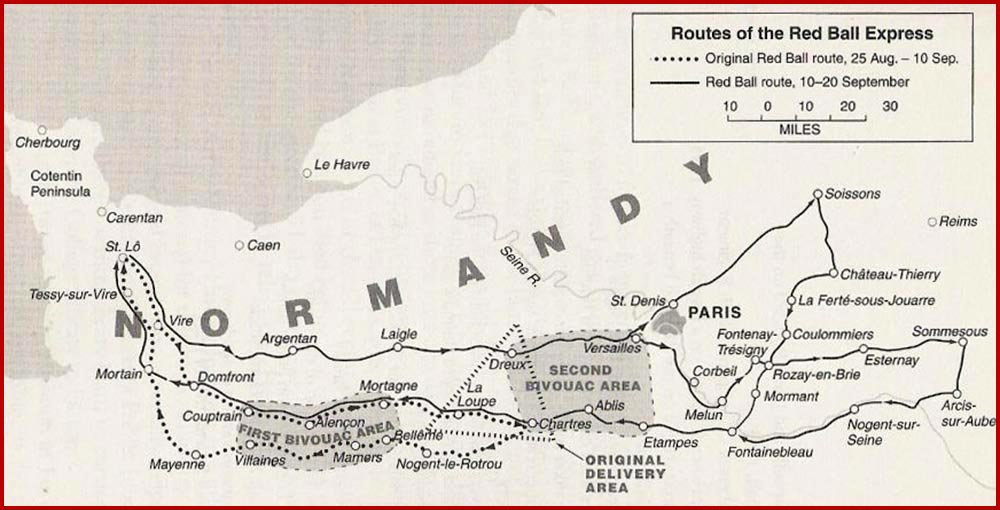
Historical map tracing Red Ball Express supply routes from Normandy toward Paris and eastern France

Red ball express

HISTORY

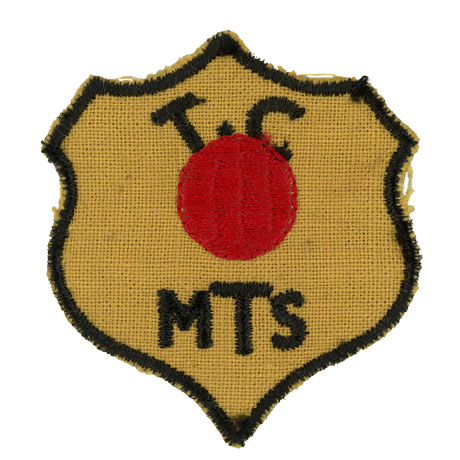
Shield-shaped transport patch with a red circle and black TC and MTS lettering
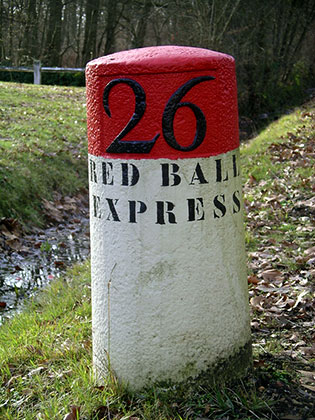
Red-and-white roadside marker numbered 26 and labelled Red Ball Express

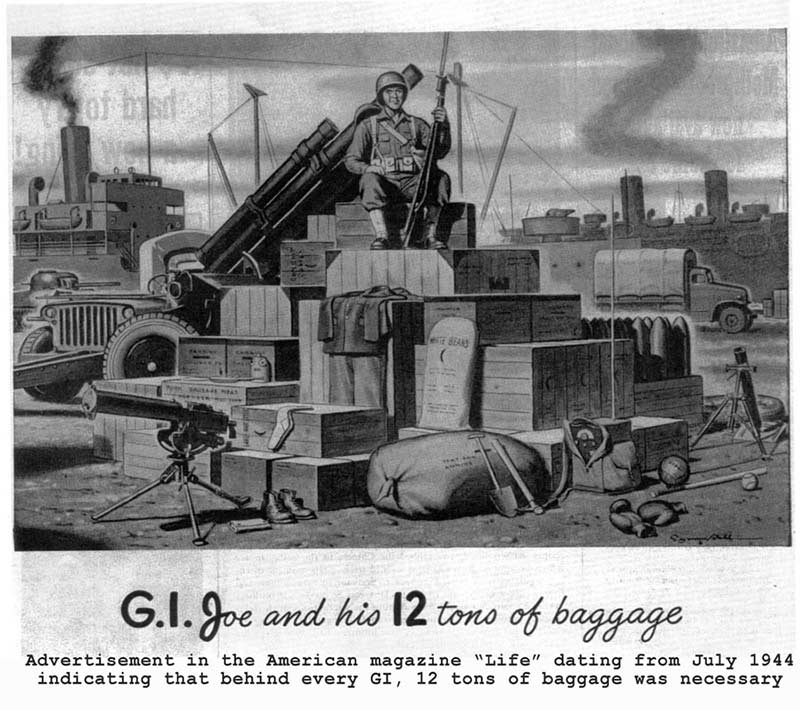
After the breakout of Normandy in July 1944, an acute shortage of supplies on both fronts governed all operations. Some 28 divisions were advancing across France and Belgium, each ordinarily requiring 700-750 tons a day. Patton’s 3rd Army was soon grinding to a halt from lack of fuel and ordnance. The key to pursuit was a continuous supply of fuel and ordnance, thus leading to the Red Ball Express.

The Red Ball Express was conceived in a 36-hour brain-storming session. It lasted only 3 months from August to November, 1944, but without it, the campaign in the European Theater could have dragged on for years.

At the peak of its operation, it was running 5,938 vehicles carrying 12,342 tons of supplies to forward depots daily.

The Red Ball Express began operating on August 25, 1944, with 67 truck companies, 3,358 trucks, mostly Jimmies, carrying 4,482 tons of supplies on a 125-mile run from Cherbourg to the forward logistics base at Chartres. Just 4 days later, the Red Ball Express included 132 truck companies and 5,958 vehicles.

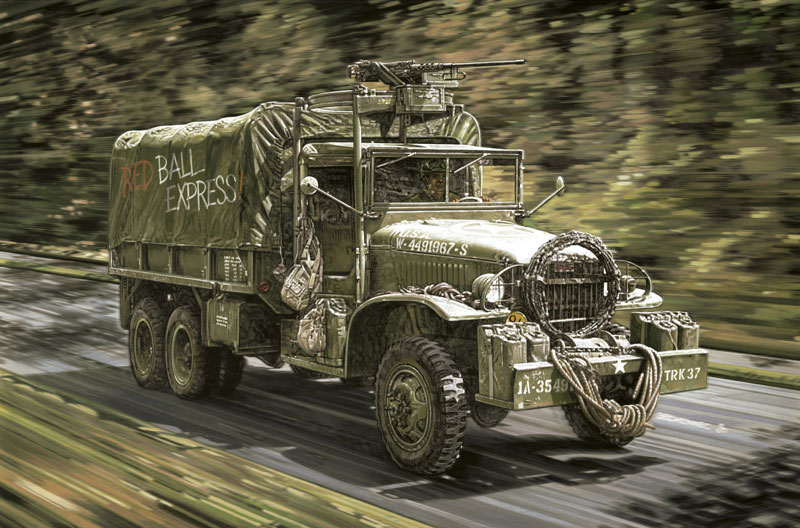
Illustration of a canvas-covered GMC military truck marked Red Ball Express driving along a road

The primary vehicle was the versatile 2 ½ ton six-wheel-drive General Motors truck nicknamed the “Jimmy”.

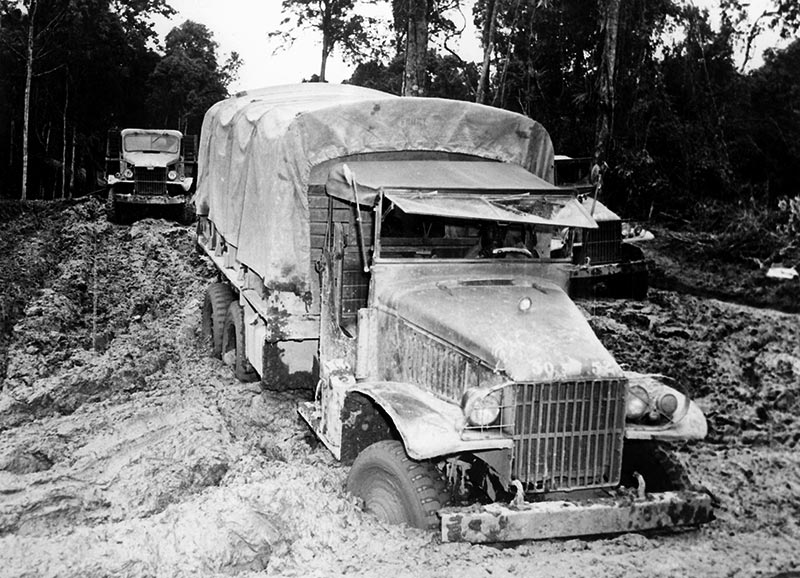
Canvas-covered military supply trucks driving through deep mud on a wooded road

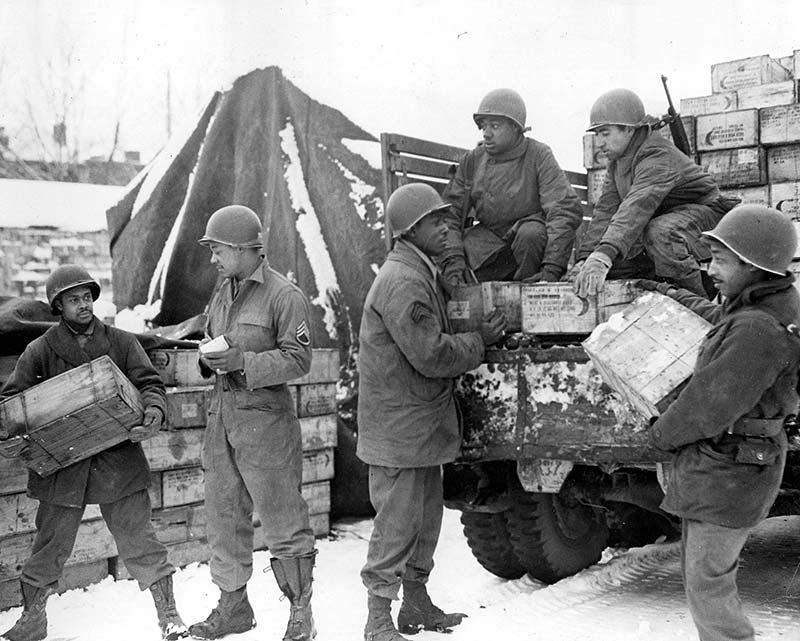
This massive supply initiative required drivers, and that meant African-Americans:

American soldiers passing wooden supply crates from a military truck in snowy conditions

On average, as many as 900 vehicles operated around the clock. They usually operated in convoys consisting of at least five trucks with Jeep escorts in front and back, although individual trucks sometimes made the run.

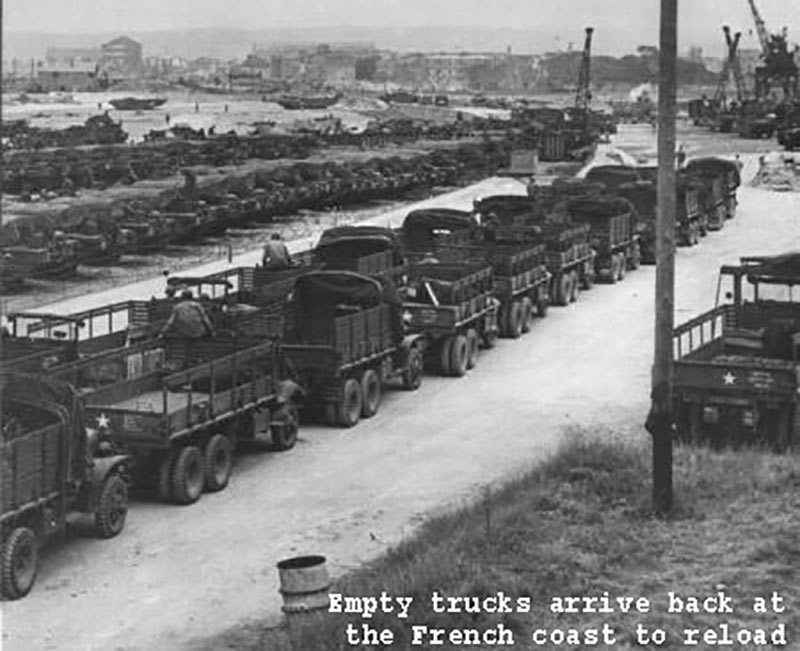
Black-and-white photograph of military trucks lined up at a French port to reload

Drivers in convoy were instructed to maintain 60-yard intervals to present less of a target to German bombers and a top speed of 25 miles per hour for safe operation. Passing was not allowed. During night runs, drivers had to operate without lights, using “cat-eye” headlight covers more to mark their presence than to see the road. The trucks were stopped for 10 minutes each hour to give the drivers a break.

Red illustration of a military supply truck marked Red Ball Express

The Red Ball Express was a seat-of-the-pants operation, organized in extreme haste, with frequent administrative and operational breakdowns. Problems were most apparent at the beginning but continued throughout its existence. Truck drivers often avoided the Red Ball Highway to take side roads, bypassed regulating stations, ignored speed limits and maintenance, and cursed at MPs who tried to bring them in line…

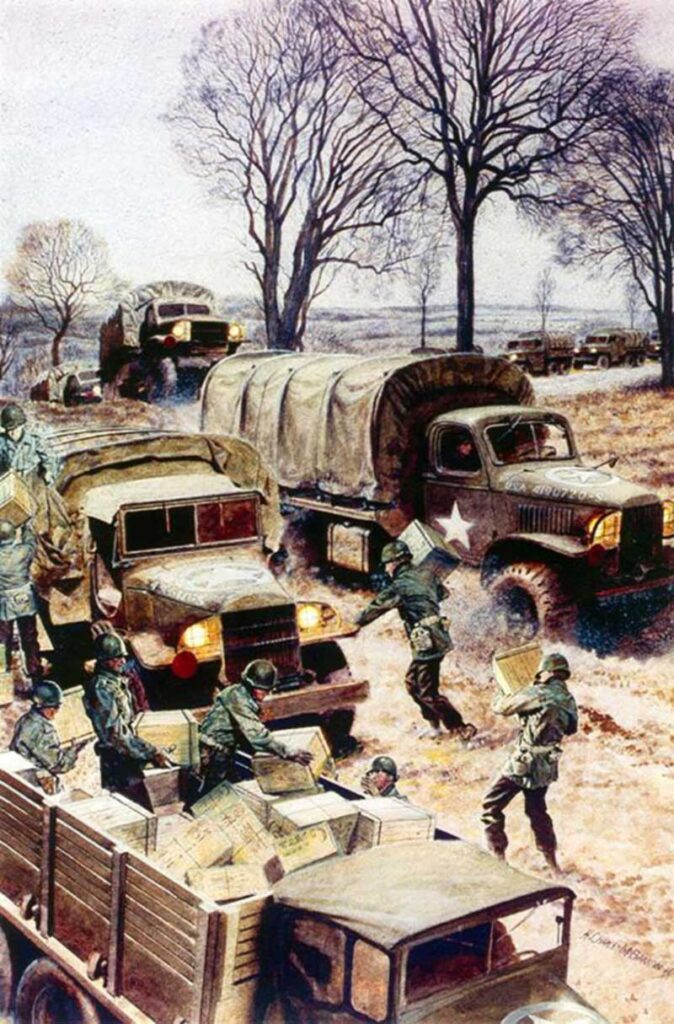
Illustration of American soldiers loading crates into military trucks beside a rural road

MTB officers immediately established traffic-control points (TCPs) that operated around the clock at principal intersections and in towns. The job of TCP personnel was to regulate convoys or any other vehicles, civilian or military, that used the dedicated highway and to ensure that Red Ball convoys had the right-of-way in all cases. TCP troops kept daily records of the arrival times of passing convoys and logged their destinations, weights, and the classes of supplies that they carried. TCP personnel also were required to have maps of alternate routes for non-Red Ball vehicles, as well as maps of the Red Ball route that showed the location of refueling points and maintenance shops for legitimate convoys and vehicles.


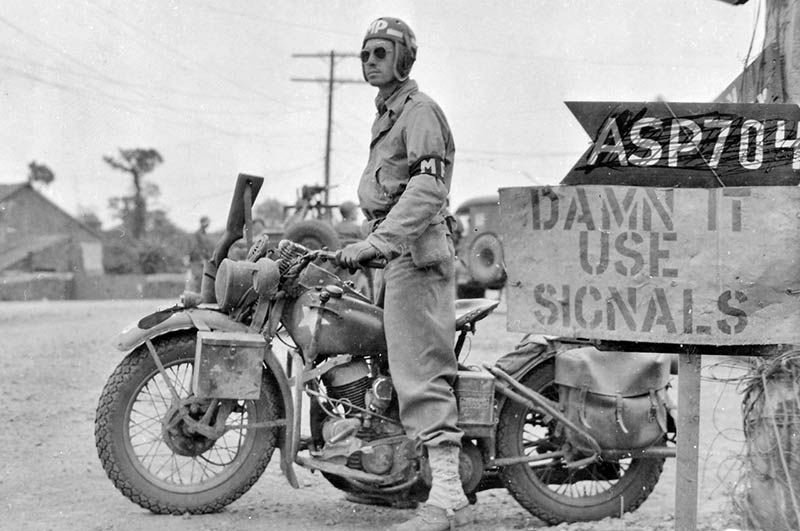
Military police were posted along the roads, with control of drivers intent on their mission:

The job of the MPs in traffic control on the Red Ball was critical to the success of the operation. There were thousands of vehicles on the highway, all in a hurry and all expecting priority treatment, but there were never enough MPs and those assigned to the Red Ball had too many other responsibilities…


There were hundreds of miles of Red Ball Highway to patrol, intersections to manage, detours to point out, and bridges to guard…

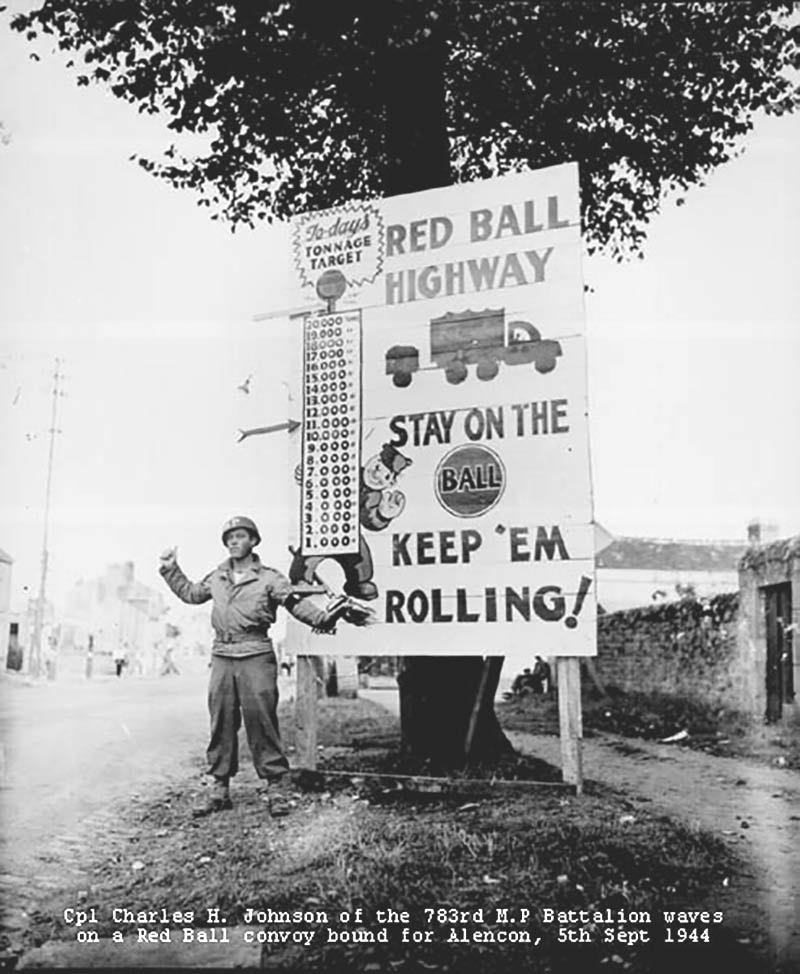
The way was marked by colorful signs to keep the drivers on the route. An oft-reprinted photograph shows a sign reading:

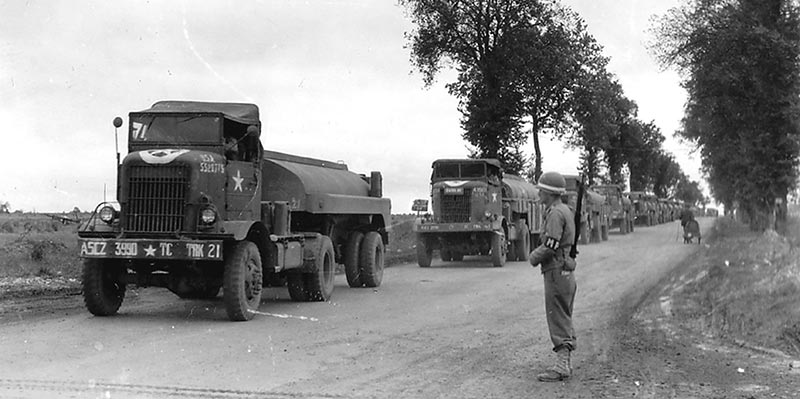
Military policeman standing beside a convoy of American tanker trucks on a tree-lined road
American military policeman standing beside a motorcycle and a roadside traffic sign
Military policeman beside a Red Ball Highway sign encouraging supply convoys to keep moving
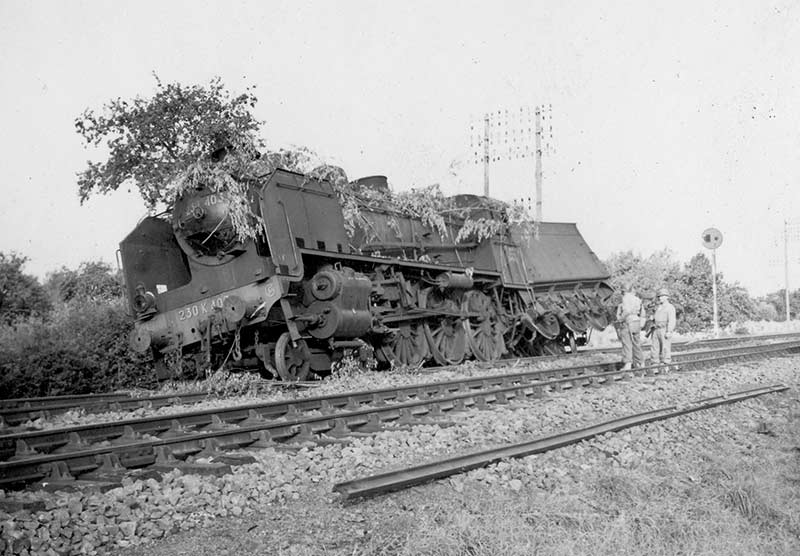
Damaged steam locomotive beside railway tracks with two servicemen nearby

RED BALL HIGHWAY - STAY ON THE BALL

KEEP ‘EM ROLLING!

Maintenance vehicles were posted along the route to repair disabled trucks. The Army opened bivouac rest areas where exhausted drivers could rest and get a hot meal.

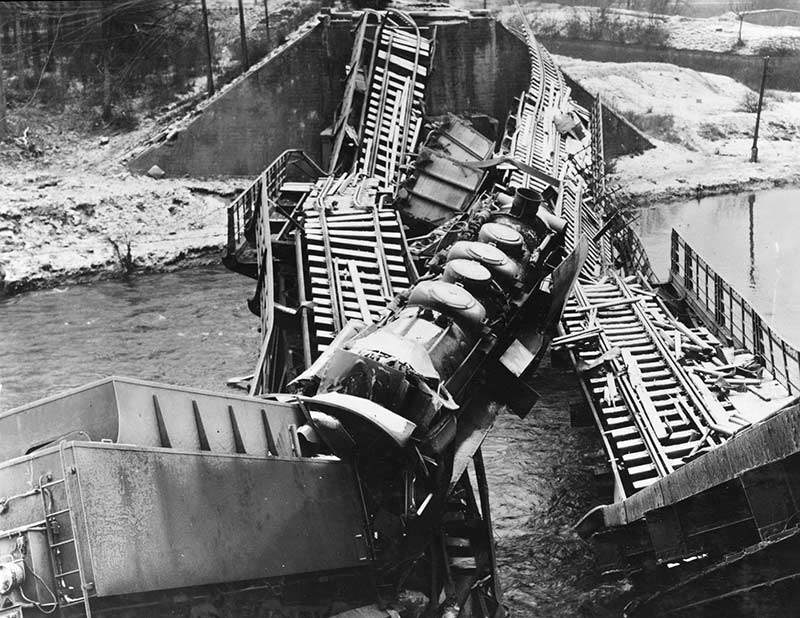
Allied reconstruction of the French railroad system brought the Red Ball Express to an end on November 16, 1944:

The reconstruction of the French rail system and the creation of truck-to-rail transfer points meant that some materiel once sent by truck across France now could be transported by rail. Trucks no longer had to make the long journey back to the invasion beaches. The need for the Red Ball diminished daily.

Red illustration of a military supply truck marked Red Ball Express
Black-and-white photograph of a wrecked locomotive and wagons on a collapsed railway bridge

From its peak performance when it transported 12,342 tons of supplies on 29 August, the Red Ball settled down to haul an average of 5,088 tons per day until 25 October when the loads dipped to an average of 2,711 tons daily. From then on, to the last day of the operation, tonnages declined. On 1 November, total tons carried on the Red Ball declined to 1,644 daily and seldom went above 2,000 tons thereafter.

Red illustration of a military supply truck marked Red Ball Express

From a high-water mark when some 132 truck companies served on the Red Ball during the first week of September, only 5 companies were left by mid-November, Red Ball’s last week. On average, some 83 truck companies served on the Red Ball during its eighty-one days of operation, with an average of 899 trucks operating on the highway on any given day. [Victory, p. 183]

The Red Ball Express was a conveyor belt on wheels carrying supplies until the rail network could carry the load.

Wartime illustration of an American soldier surrounded by crates, vehicles and military supplies
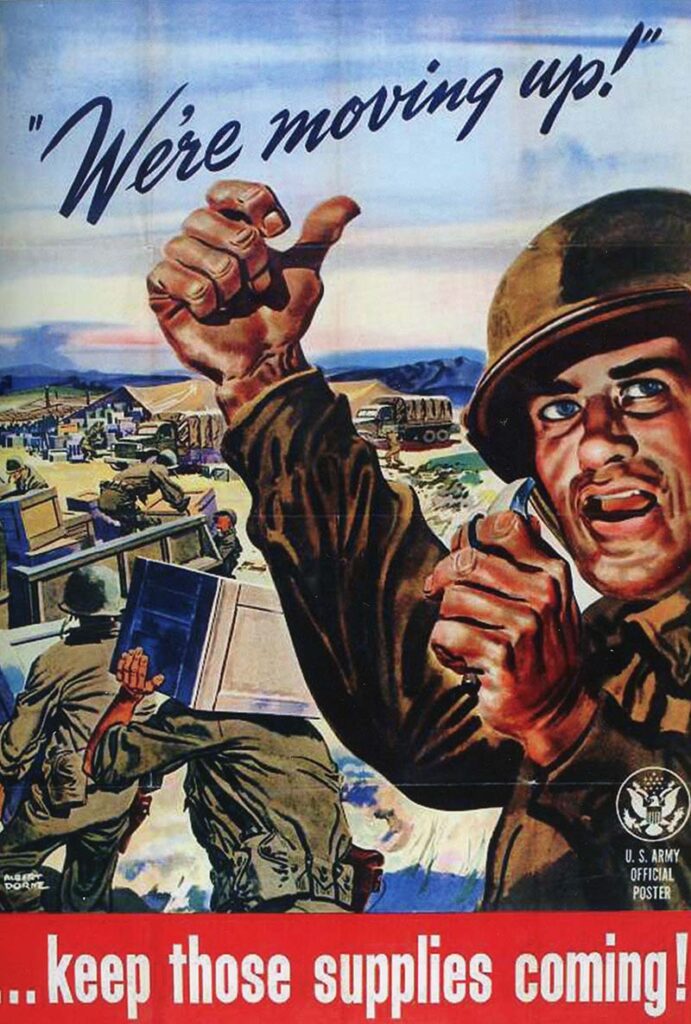
US Army poster showing soldiers loading supplies and a soldier urging the convoy forward
Shield-shaped transport patch with a red circle and black TC and MTS lettering
Red illustration of a military supply truck marked Red Ball Express

OUR DESTINATIONS

Normandy

Brittany

Loire valley

champagne

waterloo

Bastogne

Burgundy
COMING SOON

Oradour Sur Glanes & Perigord
COMING SOON